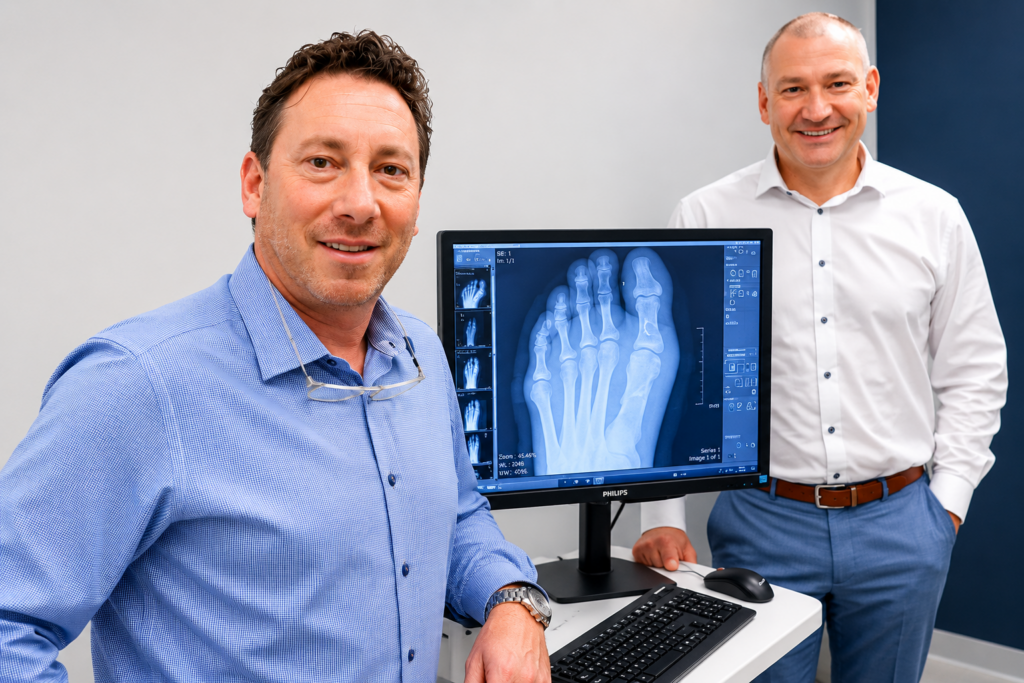
If you’re experiencing pain at the base of your big toe or noticing a progressive bump affecting your footwear choices, understanding your options within Alberta’s healthcare system is essential. A bunion (medically known as hallux valgus) is a common foot deformity. Experts estimate that around one-third of North Americans have bunions. This guide covers bunion assessment, treatment pathways, and what Albertans should expect in 2026.
Quick Answers: Do I Need to See a Podiatrist for My Bunion?
This section addresses when Albertans should seek bunion assessment before exploring detailed information below.
- Book an appointment with your Alberta family physician if you have a painful bony bump at the base of your big toe, difficulty fitting comfortable shoes, or progressive deformity affecting other toes.
- In Alberta, a family doctor (or nurse practitioner) typically initiates referrals to publicly funded foot and ankle surgeons through Alberta Health Services (AHS).
- Podiatry consultations may be available publicly (AHS-covered) or privately; surgical consults under AHS usually require a referral. There are only a few podiatric surgeons in Alberta that are covered by AHS, most other podiatrists will charge a co-pay. The Podiatric Surgeons at Feldman & Leavitt Foot and Ankle Specialists are fully covered by AHS and there is no charge to the patient to see them.
- Seek emergency care immediately for sudden severe pain, inability to walk, signs of infection (redness, warmth, fever), or trauma to the bunion area.
- Early assessment can slow bunion progression with conservative measures such as footwear changes and custom orthotics before surgery becomes necessary.
Common Bunion Symptoms and When They Become Clinically Significant
Some bunions are painless while others severely limit walking. Symptom severity not just appearance, is what guides treatment in Alberta clinics.
- Symptoms of bunions can include a visible hard bump at the base of the big toe, pain and swelling, tenderness, redness and inflammation, stiffness, skin changes, and toe overlap.
- Pain often makes symptoms worse with wearing narrow or high heeled shoes and improves with wider footwear, especially during prolonged standing or walking.
- Associated foot problems include calluses, corns between toes, overlapping of the second toe, and changes in gait affecting daily activities.
- “A bunion becomes clinically significant when pain or toe crowding starts changing how a patient walks or limits their daily activities,” explains Dr. Ziv Feldman.
- Numbness or burning around the bunion can occur from nerve irritation due to shoe pressure, sometimes affecting swollen tissue around the joint.
Why Bunions Develop: Causes and Risk Factors
Alberta podiatrists recognize bunions as resulting from a combination of inherited foot structure and environmental factors. Most bunions develop due to a combination of inherited foot structure and environmental factors such as footwear choices and pressure on the big toe joint.
- Genetics can play a significant role in bunion development, with inherited foot structures like flat feet or low arches increasing susceptibility to misalignment.
- Bunions develop due to a combination of factors, including family history, abnormal bone structure, increased motion, and shoe choice, which can put extra pressure on the big toe joint over time.
- Chronic pressure from tight, pointed, or high heels can worsen a predisposition but usually isn’t the sole cause.
- Biomechanical causes include overpronation, ligament laxity, or previous injuries affecting one or more bones in the forefoot.
- Systemic conditions such as rheumatoid arthritis can accelerate development. This health condition requires modified treatment approaches.
- Bunions are not caused by calcium deposits—they reflect joint misalignment over time. Other factors like occupational standing can aggravate progression.
Complications If a Bunion Is Left Untreated
Not every bunion requires surgery, but progressive deformity can lead to broader foot problems that Alberta clinicians aim to prevent.
- Bunions can lead to joint damage and arthritis due to chronic misalignment and abnormal friction, resulting in conditions like metatarsalgia and reduced mobility.
- Deformities of other toes such as hammer toes, claw toes, or crossover second toe may develop as the big toe shifts from its normal position.
- Bursitis, painful calluses, and recurrent skin irritation commonly develop over the bunion.
- Difficulty with work, exercise, and winter footwear (ski boots, work boots) is particularly relevant for Albertans experiencing pain.
- Severe longstanding bunions may contribute to degenerative arthritis of the first MTP joint.
How Bunions Are Diagnosed in Alberta
Diagnosis is straightforward, based on history, physical exam, and X-rays within clear Alberta healthcare pathways.
- A healthcare provider will diagnose a bunion through a physical exam, examining the foot and asking about symptoms such as when the bump was first noticed and activities that worsen the symptoms.
- During a bunion diagnosis, doctors may ask about the onset of symptoms, activities or footwear that exacerbate the condition, and check the range of motion of the toe and joint.
- Weight Bearing foot X-rays may be used to determine the overall alignment of the bones and the intermetatarsal joint when diagnosing bunions.
- Clinicians measure the intermetatarsal angle between the first and second metatarsals to quantify deformity, this is the primary measurement guiding treatment decisions.
- “The intermetatarsal angle measurement helps us determine whether conservative care is likely to succeed or if surgery should be discussed,” notes Dr. Dow.
- Advanced imaging (CT, MRI) or other tests including blood tests are rarely needed, typically reserved for complex cases or ruling out inflammatory arthritis.
Conservative (Non-Surgical) Bunion Treatment Options
In 2026 Alberta practice, first-line bunion treatment is nearly always conservative, aiming to reduce pain and slow progression.
- Non-surgical treatments focus on relieving pain and slowing the progression of the deformity, as bunions do not disappear on their own.
- Footwear changes include shoes with deep toe boxes, softer materials, avoiding high heels, and choosing the right kind of winter boots and work boots common in Alberta.
- Pain relief can be achieved through nonsteroidal anti-inflammatory drugs (NSAIDs), ice applications, and custom orthotic devices to redistribute pressure. The American Podiatric Medical Association recommends similar conservative approaches.
- Non-surgical treatments for bunions often include wearing shoes that are wider, using pads or splints to relieve pressure, applying ice wrapped in a thin towel, and taking over the counter medicines as a pain reliever.
- Bunion pads, silicone spacers, and shoe inserts provide padding but don’t permanently straighten the bone.
- Physical therapy may strengthen foot muscles. Activity modification helps when bunion pain flares.
- “Many Albertans manage comfortably for years with the right shoes and orthotics, without needing surgery,” emphasizes Dr. Darren Leavitt.
When Is Bunion Surgery Recommended? (Public vs Private Options in Alberta)
Surgery in Alberta is considered when pain, deformity, or loss of function persists despite good conservative care—not for cosmetic or other reasons.
- Surgery for bunions is typically recommended only when non-surgical treatments fail to relieve pain or when the bunion significantly interferes with daily activities.
- Clinical thresholds include persistent pain in appropriate footwear, difficulty walking or working, progressive deformity on x ray, and intermetatarsal angle exceeding certain degrees.
- “Once the intermetatarsal angle passes a specific threshold and symptoms are significant, correcting alignment surgically can restore foot mechanics,” explains Dr. Ziv Feldman.
- Publicly funded bunion surgery is performed by podiatric surgeons within AHS; a referral from a family physician is required.
- Private pay options may exist for faster access, but fees aren’t covered by AHS and must be paid out of pocket or via third-party benefits.
- Wait times vary across Alberta (Calgary, Edmonton, smaller centres) depending on surgeon availability and case urgency.
Types of Bunion Surgery and What Happens on the Day
Multiple surgical techniques exist, with the choice depending heavily on the intermetatarsal angle and overall foot shape.
- Bunion surgery aims to reduce pain and correct the deformity, and it may involve procedures such as removing the enlarged bone, realigning bones, or fusing joints, depending on the severity of the bunion.
- Common procedures include distal osteotomies (chevron), shaft osteotomies (scarf), proximal osteotomies, and first tarsometatarsal fusion (Lapidus-type) for larger angles.
- Soft tissue balancing (tendon and ligament releases) is often combined with bone realignment to return the big toe to its correct position.
- In Alberta, bunion surgery is usually day surgery under local, regional or general anesthesia, with most patients going home the same day.
- Expect admission, surgical site marking, anesthesia, procedure duration (45–90 minutes), and initial dressing application.
- Internal fixation using screws or plates holds bones in position while healing.
Recovery After Bunion Surgery in Alberta
Recovery is gradual; your surgeon will discuss expectations based on procedure type and your occupation.
- Recovery from bunion surgery can vary significantly, with some patients able to walk immediately after the procedure, while others may need to avoid weight-bearing for up to 6 weeks
- Early recovery (first 2 weeks): foot elevation, limited walking as advised, use of post-op shoe, protecting the dressing. To help reduce pain and swelling, apply ice (wrapped in a towel) to the surgical area as recommended by your surgeon.
- Intermediate recovery (2–6 weeks): suture removal, increasing walking in protective shoe, gentle range-of-motion exercises.
- Longer-term recovery (6–12+ weeks): transition to wider regular shoes, gradual return to work and sport, ongoing swelling lasting several months.
- Typical timeframes: desk work (2–4 weeks), standing jobs (6–8+ weeks), higher-impact activities (3–6 months).
- Risks of bunion surgery include stiffness, numbness, swelling, delayed healing, and infection. Other complications of bunion surgery may include the bunion returning, nerve damage, continued pain and swelling, and overcorrection of the big toe.
Costs, Coverage, and Referrals in the Alberta Healthcare Context
Costs depend on whether care is accessed through Alberta Health Services or private providers.
- Visits to a family physician and publicly funded surgical consults are covered under the Alberta Health Care Insurance Plan (AHCIP) with no direct fee.
- Custom orthotics and specialized footwear usually aren’t covered by AHS but may be partially reimbursed by private or employer health benefits.
- Publicly funded bunion surgery under AHS is generally covered for eligible residents when medically indicated, but has to be performed by podiatric surgeons with AHS hospital privileges.
- Private surgeries involve out-of-pocket fees set by the provider, which may be partially reimbursed by extended health plans.
- A referral from a family doctor is required for AHS-covered surgical assessment; some private podiatrist clinics accept self-referrals.
- Confirm coverage with both your healthcare provider and any private insurer before proceeding with custom devices or surgery.
Self-Care, Footwear Tips, and Prevention Strategies
While not all bunions can be prevented due to hereditary factors, Albertans can often slow progression and relieve symptoms through daily habits.
- Wear roomy shoes with wide and deep toe boxes to help prevent bunions from developing.
- Shoes should have low or flat heels and good arch supports to reduce pressure on the big toe joint.
- Avoiding tight, narrow, or high-heeled shoes is crucial in preventing bunions, as these types of footwear can put excessive pressure on the big toe joint.
- Try on shoes later in the day when feet are slightly swollen; bring orthotics when shoe shopping.
- Use protective pads over the bunion, gentle stretching, and monitor big toe position over time.
- Maintaining healthy weight reduces load on feet—important for Albertans who stand extensively at work.
- Early assessment of flat feet in adolescents with strong family history may allow earlier orthotic intervention to prevent bunions.
Similar strategies can also help prevent a tailor’s bunion, which is a bony bump at the base of the little toe. A tailor’s bunion affects the joint at the base of the little toe and is similar to a regular bunion but located on the outside of the foot.
When to See a Provider and What to Ask at Your Consultation
Preparing questions helps Albertans make the most of their family doctor or podiatrist appointment.
- Book an appointment for increasing pain, difficulty finding shoes, visible progression of toe drift, or new problems in neighboring toes.
- Ask: How severe is my bunion based on X-rays? What is my intermetatarsal angle, and how does it influence treatment?
- Inquire about conservative care: Which footwear changes, orthotics, or other treatments are most appropriate?
- Regarding surgery: What type of procedure is recommended? What’s the expected recovery timeline for my job and lifestyle? What complications should I expect?
- Ask about AHS referral pathways versus available private options, including anticipated wait times.
- “Don’t delay the discussion when bunion pain starts to limit your daily life—earlier planning allows more choices,” advises Dr. Dow.
FAQ’s
How do I get a bunion referral in Alberta?
In Alberta, most patients begin by visiting a family physician or nurse practitioner, who can refer you to a foot and ankle specialist through Alberta Health Services.
Publicly funded surgical consultations typically require this referral, while some private clinics may offer direct booking options.
Is bunion surgery covered in Alberta?
Yes—when medically necessary, bunion surgery performed within the public system is typically covered. To access this pathway, patients usually require a referral through
Alberta Health Services.
Wait times may vary, and private options may be available for faster access at an out-of-pocket cost.
What happens if I ignore a bunion?
If left untreated, bunions can lead to:
- Increased joint damage and arthritis
- Toe deformities (e.g., hammertoes)
- Chronic pain and mobility issues
- Difficulty with work or daily activities
Progression varies, but early assessment—and referral when needed—can help reduce long-term complications.
What is the best treatment for bunions in Calgary?
The best treatment depends on your intermetatarsal angle, symptoms, and lifestyle. Most patients start with conservative care, but if pain and deformity progress, referral to a specialist for further evaluation may be recommended to explore surgical options.
Contact Form – Calgary Podiatry
Contact Form – Please let us know about your condition in the below box so our team can better assist you.